Illuminators
By the type of emitted light, illuminators can be classified into white-light illuminators, warm-light illuminators, and IR illuminators.
By function, illuminators can be classified into strobe lights, flash lights, continuous lights, and all-in-one intelligent illuminators. Table 1-12 describes the illuminators.
Type |
Description |
Application |
|---|---|---|
Strobe light |
A strobe light is a device used to produce flashes of light at adjustable frequencies. Most IR illuminators are classified as strobe lights. |
Strobe lights, mainly used in ePolice and checkpoint modes, illuminate ambient environments and vehicles/license plates at adjustable frequencies to increase the brightness and clarity of live video images and captured images. |
Flash light |
Flash lights emit a single burst of light in order to provide illumination when cameras are capturing an image. In traffic detection scenarios, flash lights are usually controlled by cameras and flash when the cameras are capturing images. |
Flash lights are mainly used in checkpoint mode in order to illuminate ambient environments, vehicles/license plates, and vehicle interiors. The capture of vehicle interiors includes drivers and front passengers, seat belt violations, and hands-free device violations. |
Continuous light |
When a continuous light is turned on, it stays on and does not flash. |
Continuous lights, mainly used in entrance/exit mode, illuminate ambient environments and vehicles/license plates to improve the brightness and clarity of captured images. |
Smart LED illuminator |
The smart LED illuminator is a strobe/flash integration light with high cutoff frequency and can effectively reduce light pollution. This illuminator can either produce flashes of light at a certain frequency or emit a single burst of light when capturing an image. In a word, this illuminator can function both as a strobe light and a flash light. |
Smart LED illuminators are mainly used in checkpoint mode in order to illuminate ambient environments, vehicles/license plates, and vehicle interiors. The capture of vehicle interiors includes drivers and front passengers, seat belt violations, and hands-free device violations. |
All-in-one intelligent illuminator |
This kind of illuminators can function as the xenon flash light, LED flash light, and LED strobe light, remarkably reducing light pollution and saving costs. |
The illuminators are mainly used in checkpoint mode in order to illuminate ambient environments, vehicles/license plates, and vehicle interiors. The capture of vehicle interiors includes drivers and front passengers, seat belt violations, and hands-free device violations. |
Generally, ITS cameras whose model names contain the letter L have built-in white-light strobe lights.
External illuminators are required if a camera does not have a built-in illuminator or the built-in illuminator of a camera is enabled but the ambient illumination is still insufficient. In most scenarios, external illuminators are used to ensure bright images. Flash lights are recommended to improve the snapshot quality, especially in speed estimation scenarios.
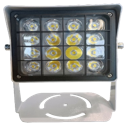
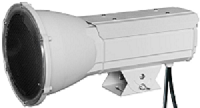
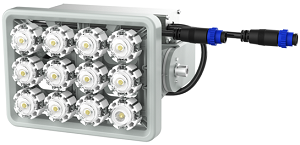
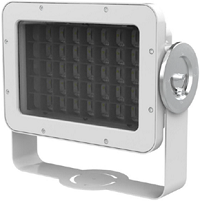
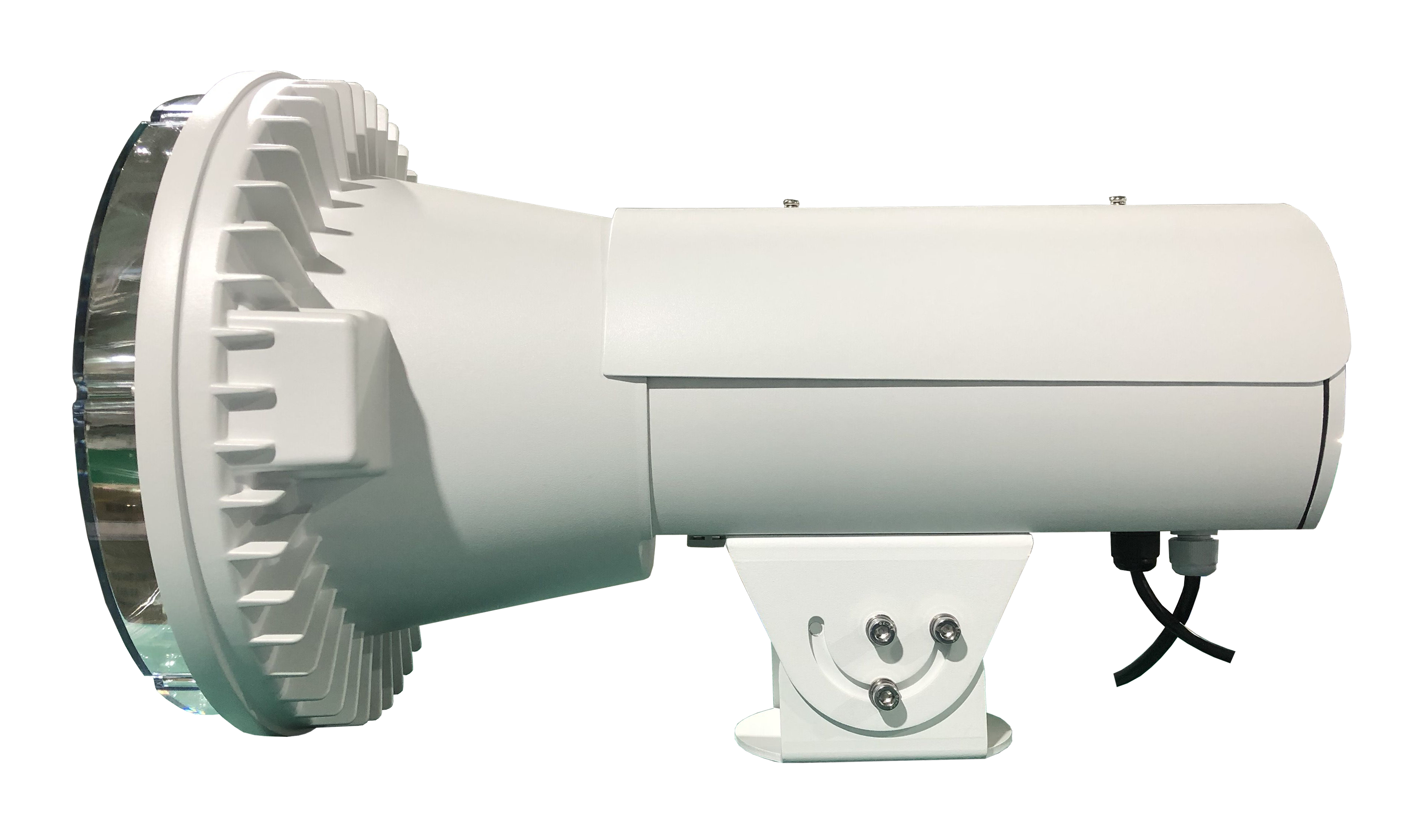
In standard checkpoint scenarios, use the CXBG-1-PS-ACC5410 white-light strobe lights, CXBG-1-PS-ACC5411 warm-light strobe lights or CXBG-1-PS-ZP201 warm-light strobe lights (as shown in Figure 1-2), and CXBG-2-MC-ACC5511 flash lights (as shown in Figure 1-3). In highway ramp scenarios, use the C2320-MW-35W continuous light, as shown in Figure 1-4. If light pollution needs to be reduced at night, you can use the CXBG-1-PS-ACC5413 smart LED illuminator or all-in-one intelligent illuminator. Figure 1-5 and Figure 1-6 show typical appearance of the two types of illuminators.

To achieve better snapshot quality, you are recommended to use flash lights whose recycle time is shorter than 80 ms. To obtain the recycle time, view the user manual of the flash light or consult the manufacturer.