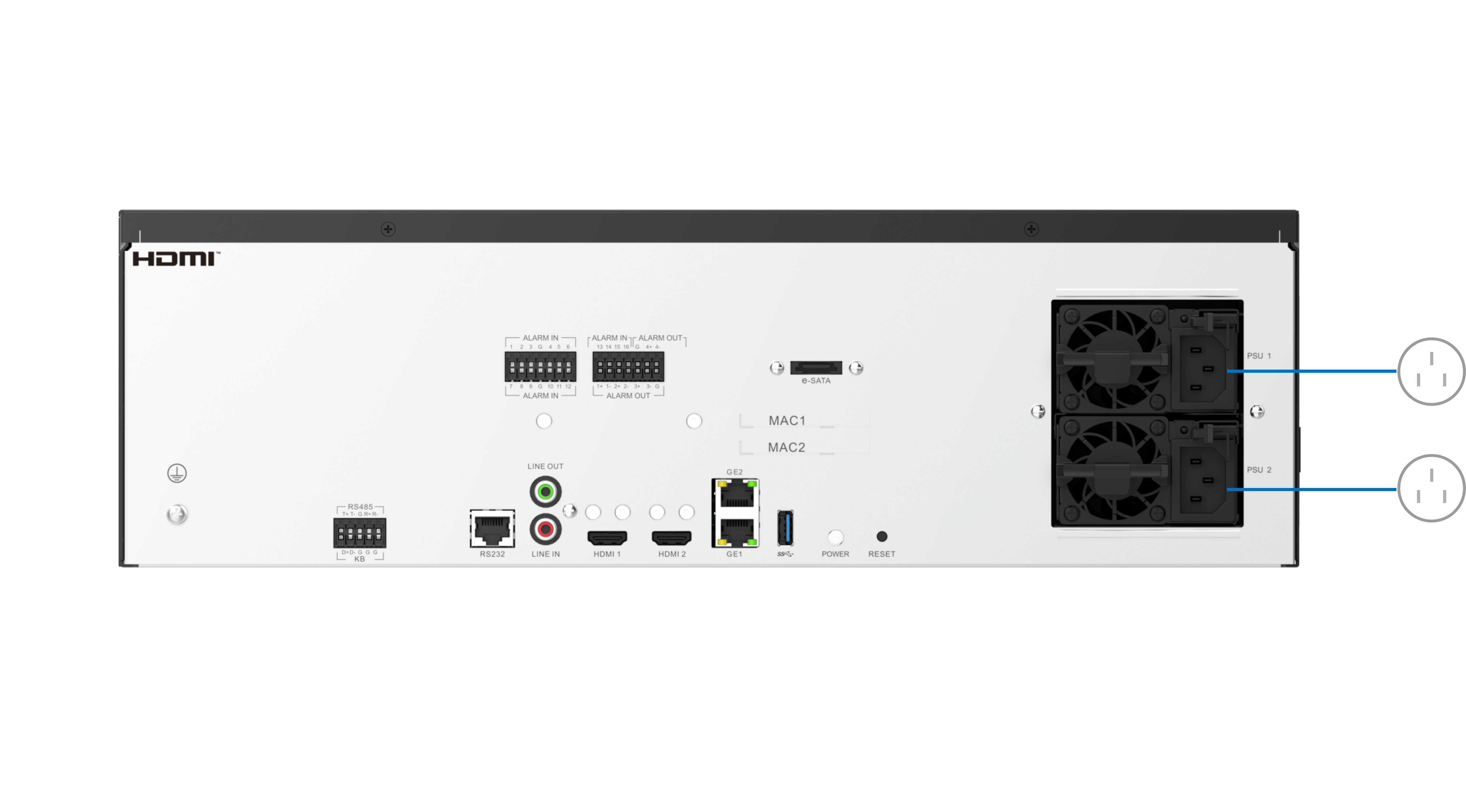
HWT-IVS1800-E16
Procedure
- Install a disk.
- Put on an ESD wrist strap.
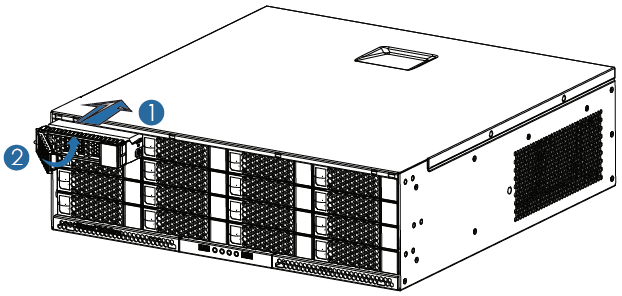
- Press the latch on the disk module to release the handle and pull out the disk module.
The serial numbers of disk trays are shown in the right figure below.
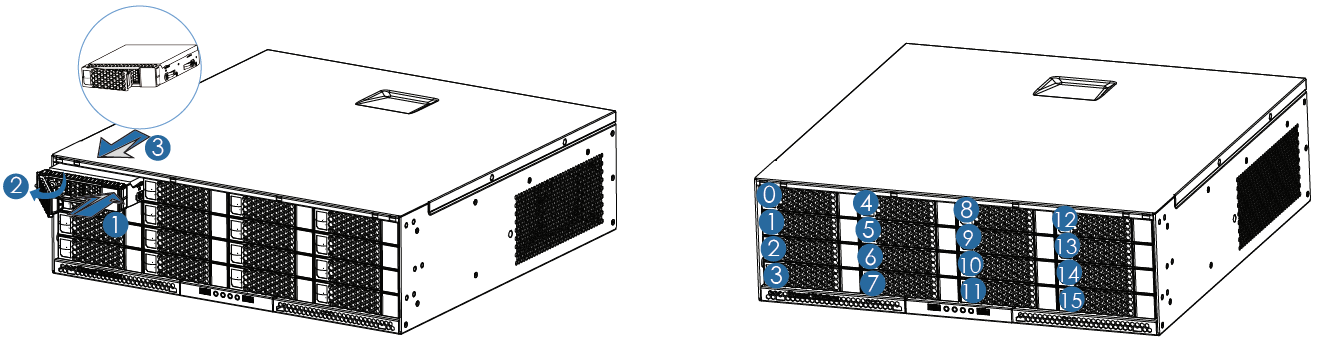
- Gently pull both sides of the disk handle to unfasten the latches of the disk tray from the handle, install a disk, and use a PH2 screwdriver to tighten the screws on both sides of the handle.

If the number of disks is less than or equal to 4, you are advised to install the disks as follows:
- If there are two disks, insert the disks into trays 0 and 4.
- If there are 3 or 4 disks, insert two disks into trays 0 and 1, and the remaining disks into tray 4 and any tray after tray 4.

- Fully open the handle of the disk module, insert the disk module into the empty tray, and close the handle.

- If disks are not fully configured, you are advised to insert disks into trays in rows from top to bottom.
- If a disk is removed and then reinstalled, you are advised to attach a serial number (SN) label to the disk to prevent the system from running improperly due to misplaced disks.
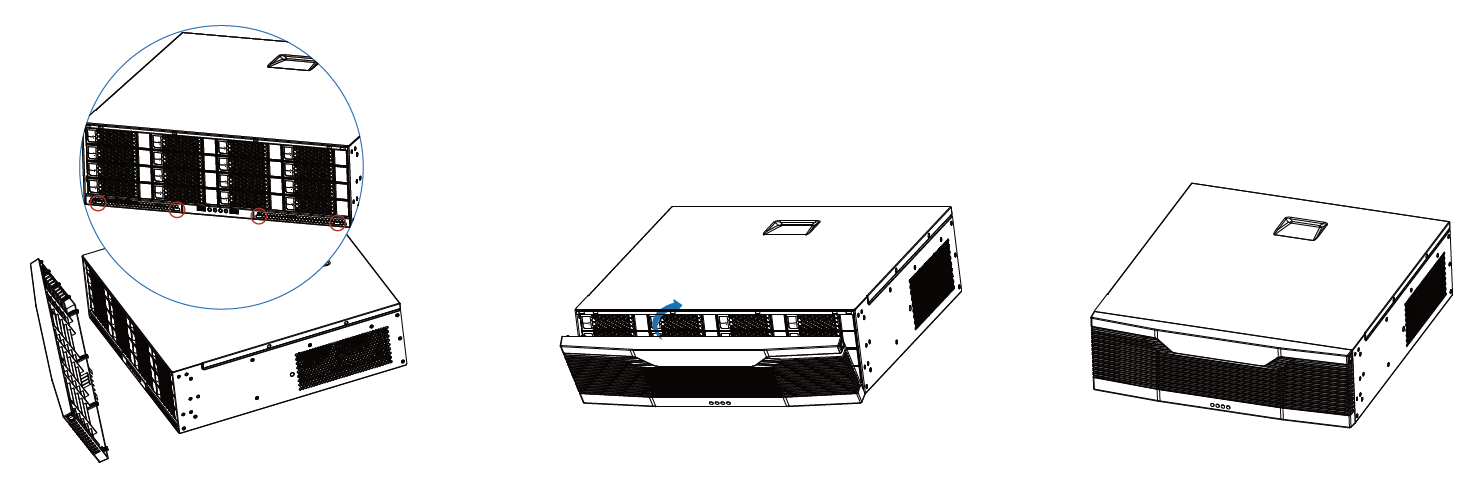
- Fasten the lower edge of the front panel to the , and rotate the front panel clockwise until the front panel is closed.

The front panel of the device is not a force-bearing component. Do not use the front panel as a force-bearing point during transportation. Otherwise, the chassis may fall off.
- (Optional) Install the device in the cabinet. For details about how to install the cabinet, see Installing the HWT-IVS1800-D08/D16/E08/E16/LLM in a Cabinet.
- Connect the two monitors.
- The two HDMI ports support output from different sources.
- By default, the monitor (left) connected to the HDMI 1 port is the primary monitor, which can be used for live video viewing and other related operations. The monitor (right) connected to the HDMI 2 port is the secondary monitor, which can be used only for live video viewing.
- The LDU supports dual-monitor switchover, after which the two monitors' supported services are also swapped.
In dual-monitor mode, if you have not logged in to the LDU, only the monitor (left) connected to the HDMI 1 port displays the login page. After logging in to the LDU and accessing the live video viewing page, you can switch between the monitors.
- The monitor (left) connected to the HDMI 1 port supports at most 64 channels of live video while the monitor (right) connected to the HDMI 2 port supports at most 16 channels of live video.
The number of channels supported for live video viewing varies depending only on the type of the HDMI port a monitor is connected to.
- The HDMI-to-VGA port can be used to output signals to the monitor with a VGA port.
The is delivered with an HDMI-to-VGA cable.
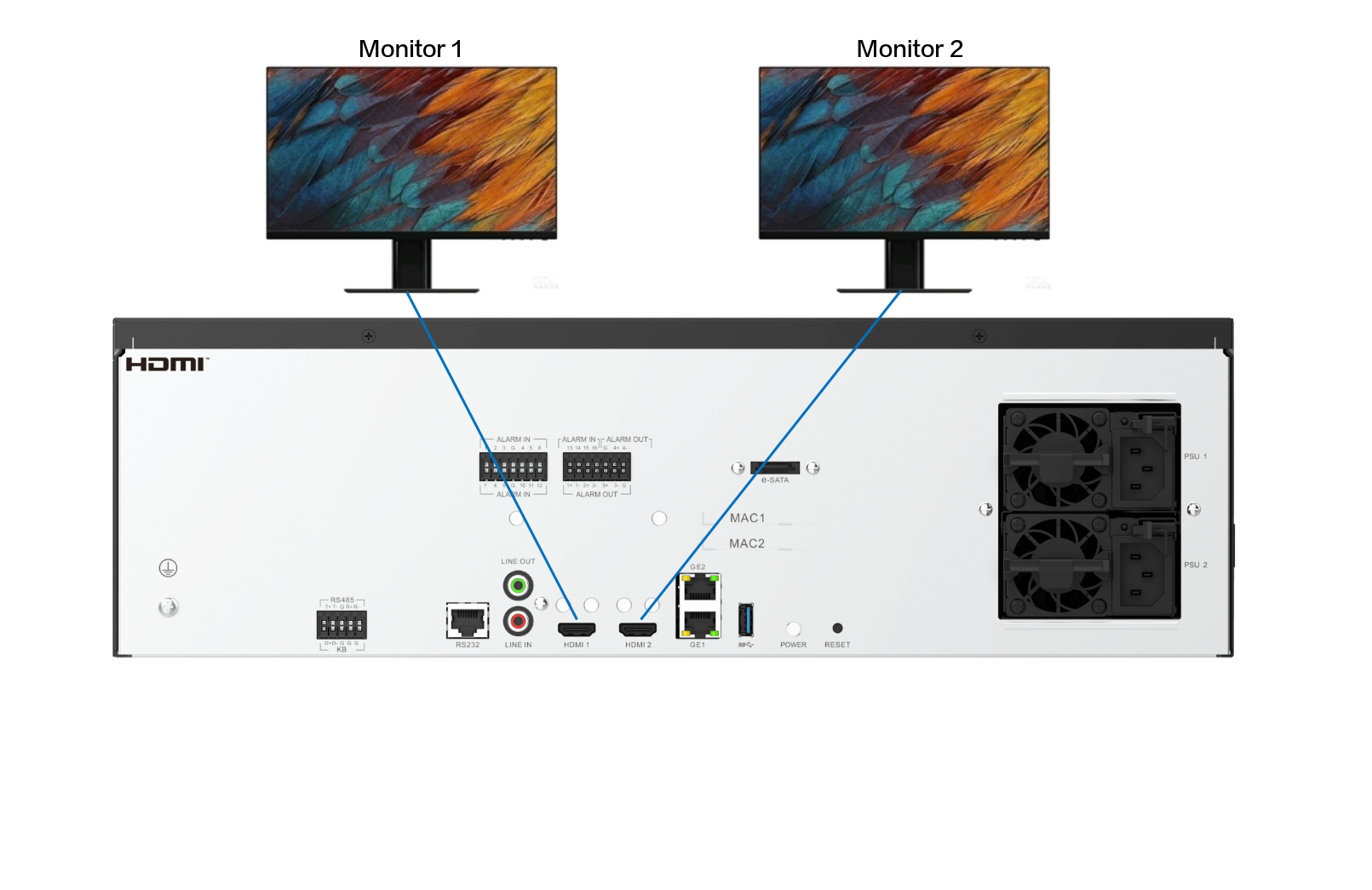
- The two HDMI ports support output from different sources.
- Connect to the network.The device supports the following two network connection modes:
- Single-address mode: Two network adapters of the HWT-IVS1800 form a bond and are configured with the same IP address.
The single-address mode is applicable to scenarios where the cameras, HWT-IVS1800, iClient S100, and VMS platform are on the same network.
To ensure high reliability of the device network or to forward a large amount of data on the network, you need to configure port aggregation for the ports of the switch.
- Dual-address mode: Two network adapters of the HWT-IVS1800 run independently and are configured with IP addresses in different network segments.The dual-address mode is applicable to scenarios where the cameras, HWT-IVS1800, iClient S100, and VMS platform are on different networks.
- Cameras can connect to the HWT-IVS1800 only through the GE1 network port (southbound connection).
- The iClient S100 can connect to the HWT-IVS1800 through the GE1 network port (southbound connection) and GE2 network port (northbound connection) at the same time.
- Only one VMS platform can connect to the HWT-IVS1800, through either the GE1 (southbound connection) or GE2 network port (northbound connection).
- If a VMS platform has connected to the HWT-IVS1800 through the GE1 network port (southbound connection), the GE2 network port is unavailable for connecting other VMS platforms.
- If a VMS platform has connected to the HWT-IVS1800 through the GE2 network port (northbound connection), the GE1 network port is unavailable for connecting other VMS platforms.
Figure 3-10 Single-address mode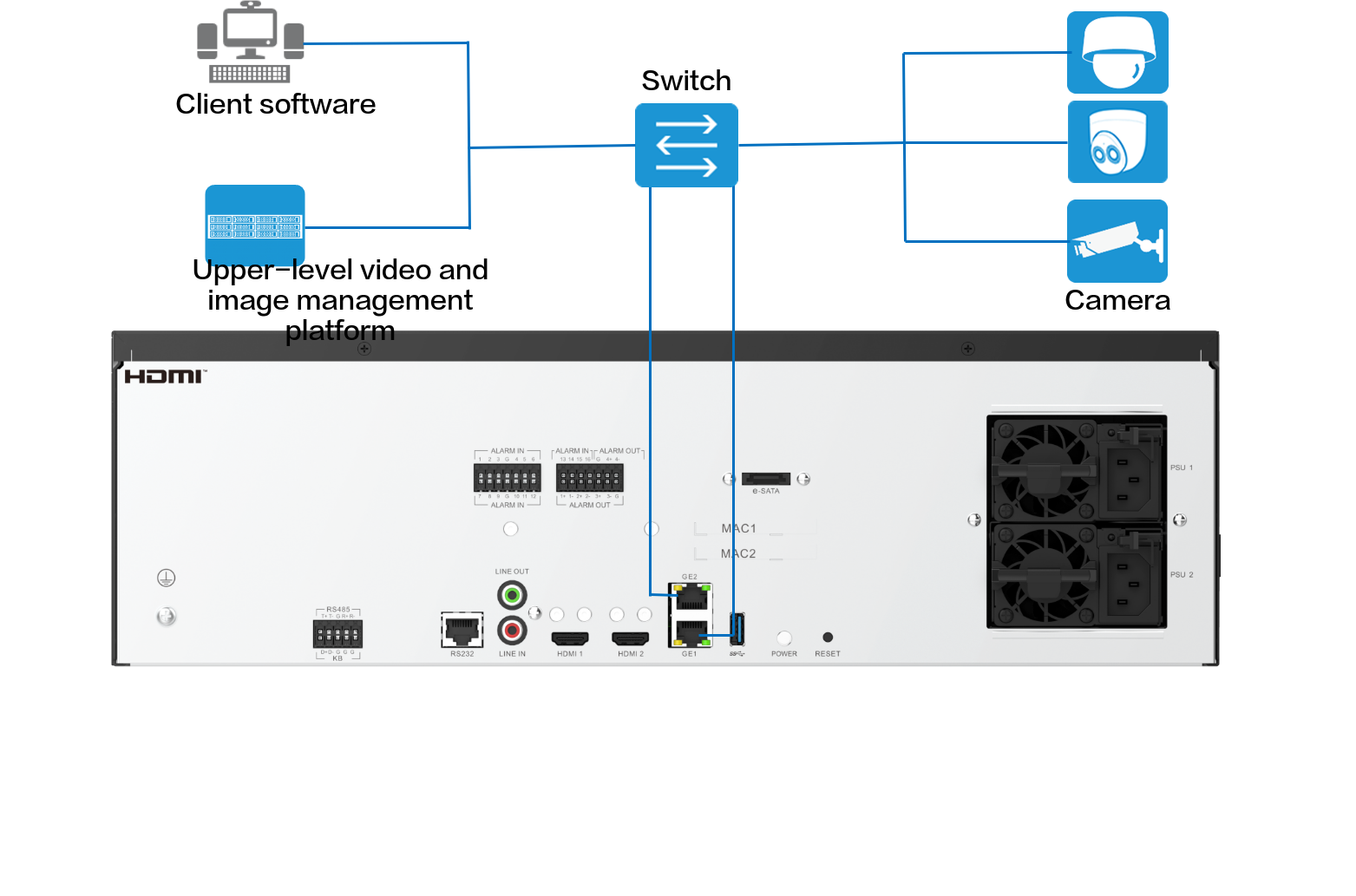 Figure 3-11 Dual-address mode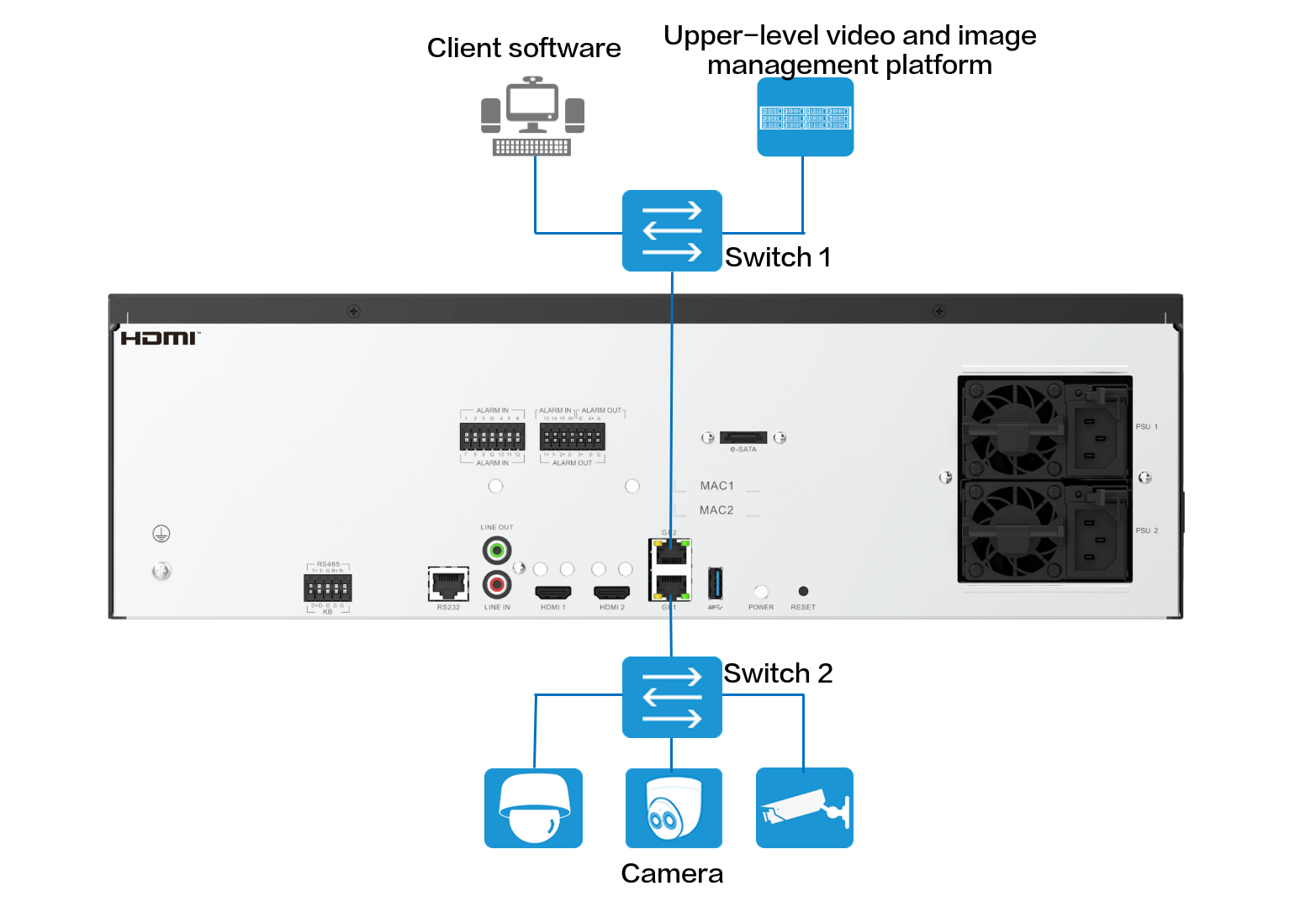
- Single-address mode: Two network adapters of the HWT-IVS1800 form a bond and are configured with the same IP address.
- Connect the mouse.
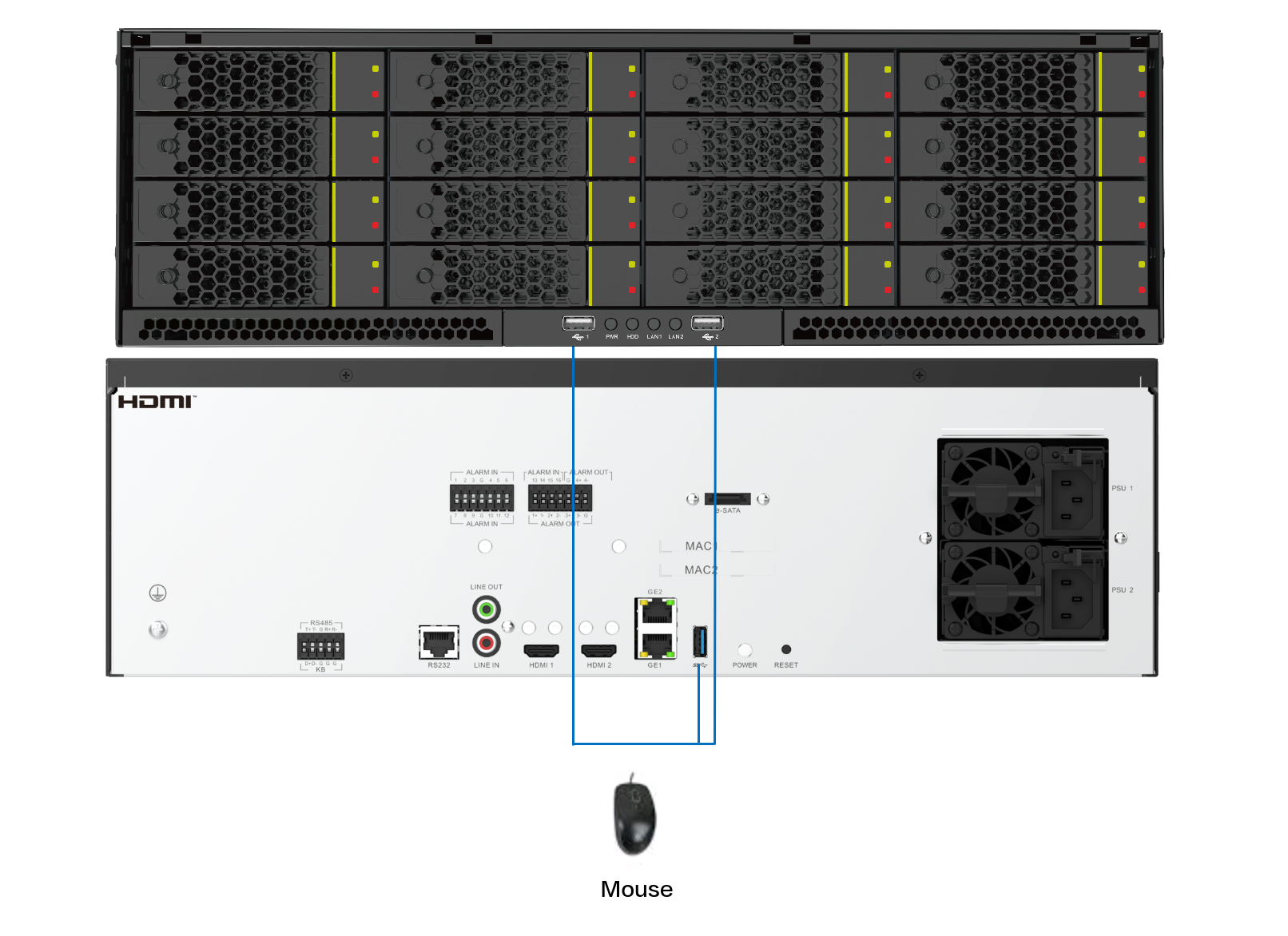
- Connect the power cable and power on the device.